

 Écologique
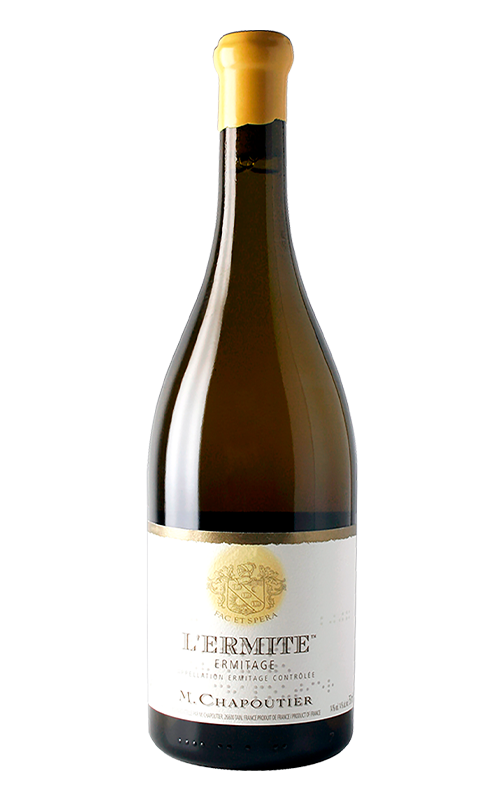
M. Chapoutier Ermitage L'Ermite Blanc 2021
Description
Nous sommes en présence de l'un des joyaux de Michel Chapoutier, issu des coteaux vertigineux de l'Hermitage. Le M. Chapoutier Hermitage L'Ermite Blanc est un vin Mono-cépage élaboré à partir du cépage autochtone Marsanne, cultivé en biodynamie. Ce millésime 2021 se distingue par un nez où se dévoilent des notes de vanille, de fruits secs et une pureté minérale extraordinaire.
Fiche technique

Dégustation
Vignoble et élaboration
L'avis des experts
The 2021 Ermitage l'Ermite Blanc was tasted one month prior to bottling, hence the parenthetical rating. Scents of crushed stone accent notes of apricot, pineapple and lime on the nose, while the palate is medium to full-bodied. In the mouth, this is straight, almost severe; it tells you when to jump and how high, with zesty, briny notes lingering long on the finish.
The clear standout of the whites from Chapoutier in 2021 is the 2021 Ermitage L'Ermite Blanc, a vibrant, concentrated, yet chisel and focused Hermitage Blanc. Subtly reductive notes of orange blossom, sappy flowers, almond paste, and a liquid rock-like minerality all define the aromatics, and it hits the palate with medium-bodied richness, a beautifully balanced mouthfeel, and a great finish. Aged 90% in demi-muids (25% new) and 10% in tank, it deserves 3-4 years of bottle age and will evolve nicely over the following 10-15 years.

Michel Chapoutier est l’un des élaborateurs de vin les plus célèbres de France. C’est en élargissant ses horizons qu’il puise à la fois ses racines dans la plus grande propriété vitivinicole du Rhône.





Millésimes: 2025 2024 2023 2021
Nos membres n’ont pas encore laissé de commentaires pour ce millésime. Cliquez sur les millésimes précédents pour accéder aux commentaires.
Nos membres n’ont pas encore laissé de commentaires pour ce millésime. Cliquez sur les millésimes précédents pour accéder aux commentaires.
Nos membres n’ont pas encore laissé de commentaires pour ce millésime. Cliquez sur les millésimes précédents pour accéder aux commentaires.
Nos membres n’ont pas encore laissé de commentaires pour ce millésime. Cliquez sur les millésimes précédents pour accéder aux commentaires.