
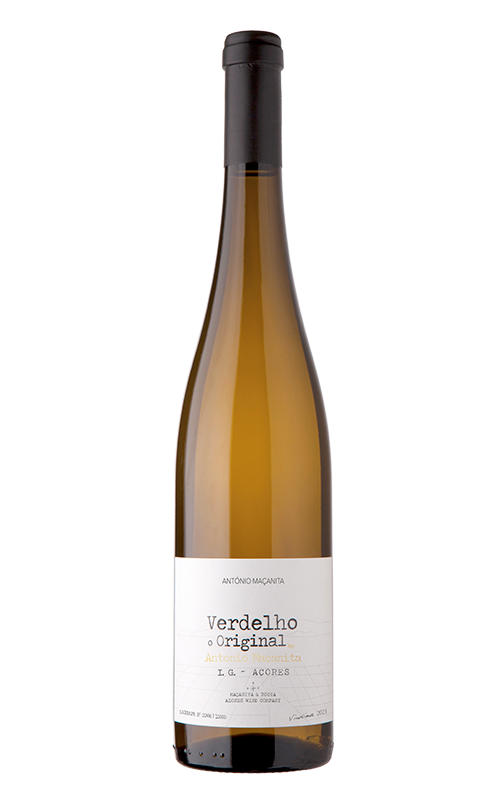
Azores Wine Company Verdelho O Original 2023
Description
Le Verdelho, le Gouveio et le Verdejo sont trois cépages distincts que l'on confond souvent. Ce vin est élaboré à partir du Verdelho authentique, celui qui est cultivé aux Açores. Son goût minéral, ses notes de fruits tropicaux et sa très belle acidité sont tout simplement captivants. Un blanc unique.
Fiche technique
Dégustation
Vignoble et élaboration
L'avis des experts
I tasted the 2023 Verdelho o Original one week before bottling. 2023 was an average year, not particularly rainy or dry and much like 2021 and 2022. This feels quite tense—more tense than 2022—like a hypothetical blend of 2021 and 2018 (2018 was very linear). It has 12% alcohol, a pH of 3.42 and 6.69 grams of acidity. It's quite balanced, with freshness, acidity and minerality. The first pressing, which was 80% of the volume, fermented in stainless steel, and the second pressing (20% of the juice) was in used oak barrels, where the wine matured with lees for a period of eight months. This is still very primary, with some sensations of botrytis, but I believe it will go in the direction of the 2021 and the 2020.
This opens with floral aromas of chamomile and limes. The palate is subtler than the arinto or terrantez with less acidity. It’s mellower with a subtle texture that follows through to a white fruit finish. Drink now.

Un vin 100 % Maçanita. Frais, minéral, fruité et profond. Un blanc qui appelle la terrasse, le soleil et… un plat de crevettes !





Millésimes: 2025 2024 2023 2021
Nos membres n’ont pas encore laissé de commentaires pour ce millésime. Cliquez sur les millésimes précédents pour accéder aux commentaires.
Nos membres n’ont pas encore laissé de commentaires pour ce millésime. Cliquez sur les millésimes précédents pour accéder aux commentaires.