

Tartalo 2024
Description
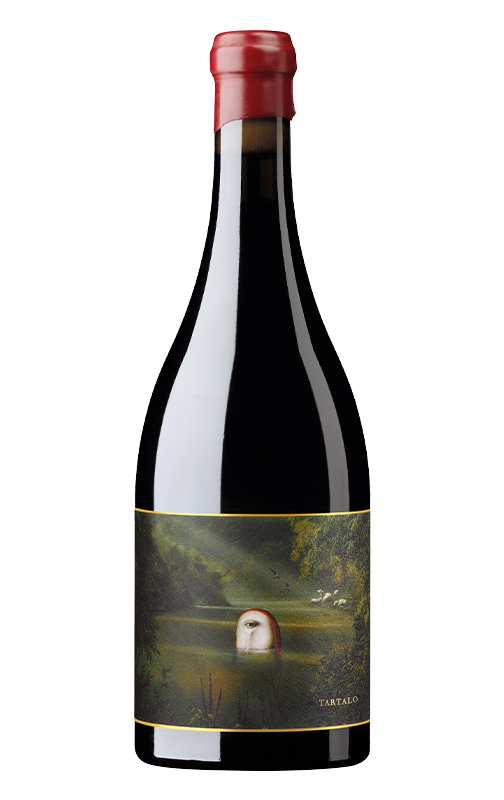
Son nom provient d'un cyclope de la mythologie basque habitant le « vieux monde », un monde spirituel et onirique, avec lequel Oxer Bastegieta, son créateur, souhaite évoquer ce petit univers spirituel aujourd'hui disparu. Sur l'étiquette, on voit Tartalo émerger du lac de manière provocante, tel Excalibur, regardant du coin de l'œil le troupeau de moutons qui constituera son repas.
Tartalo est avant tout un vin unique, issu d'une seule parcelle, qui reflète tout le paysage qui entoure le vignoble, lui conférant une longévité et une fluidité tannique uniques.
Fiche technique
Dégustation
Vignoble et élaboration
L'avis des experts
The 2024 Tartalo comes from a plot planted with a field blend, 0.7 hectares planted in 1920 in the village of Elvillar (Rioja Alavesa) at 600 meters above sea level in the zone known as Barranco de San Julián on limestone soils that deliver no more than 3,000 kilos per hectare. This is the most calcareous vineyard he works. It's mostly Tempranillo with a little Viura and some scattered plants of Graciano. The grapes were picked early to avoid too high alcohol and fermented partly destemmed and partly whole clusters that were foot trodden with indigenous yeasts in stainless steel, then the wine matured in 600-liter barrels for 10 months and periodically racked. This is very stony, earthy wine from very shallow soils, only 30 centimeters deep. The vines struggled and, despite their age, they are not very big, but that gives the wine incredible texture, and it's super dry and chalky, with fine granularity. The wine has the aromas of the place, full of aromatic herbs, rosemary and thyme. In 2024, this wine has lower alcohol than ever at 13%, with contained ripeness and a pH of 3.5. I've never seen it as chalky as this. He makes three barrels of this; two of them contribute to the blend of Kalamity, and the other one is bottled separately into this wine. There are some 900 bottles. It was bottled in September 2025.

Oxer Bastegieta est un jeune viticulteur et œnologue basque qui a fait le grand saut en misant sur Laguardia comme centre d'une nouvelle approche des vins de la Rioja, sans pour autant renier ses racines dans l'univers du txakoli.





Millésimes: 2024 2022
Nos membres n’ont pas encore laissé de commentaires pour ce millésime. Cliquez sur les millésimes précédents pour accéder aux commentaires.
Nos membres n’ont pas encore laissé de commentaires pour ce millésime. Cliquez sur les millésimes précédents pour accéder aux commentaires.