

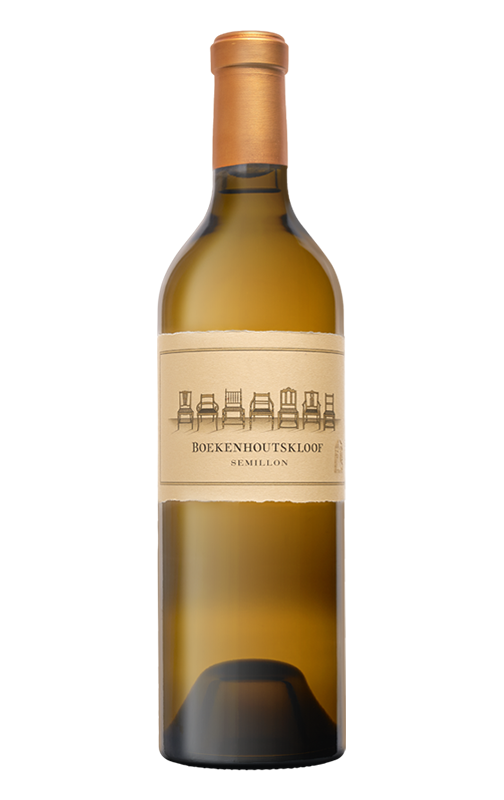
Boekenhoutskloof Semillon 2022
Description
Les raisins utilisés pour élaborer ce joyau blanc proviennent principalement de certains des plus anciens vignobles d'Afrique du Sud, plantés il y a plus d'un siècle. Parmi eux, deux vignobles situés dans l'ancien lit de la rivière Franschhoek, plantés en 1902 et 1942, et le vignoble La Colline, créé en 1936 sur un versant plus élevé de la vallée. L'assemblage comprend également un petit pourcentage de Muscat d'Alexandrie récolté tôt dans le vignoble de 1902, ajouté pour apporter de l'acidité plutôt que des arômes. Le résultat est un vin élégant, frais, expressif et inoubliable, une véritable merveille qui démontre le potentiel de ce cépage français sur les terres sud-africaines.
Fiche technique
Dégustation
Vignoble et élaboration
L'avis des experts
Creamy and textural, with complex layers and aromas of almond, waxed lemon, thyme, persimmon and fragrant apricot. Cedar, too. Full-bodied but with wonderful freshness. Full of fruit on the palate with a very long finish. From old vines planted in 1902, 1942 and 1936. Vinified 70% in new oak and 30% in concrete egg. Drink or hold.
This stunning Sém is made from some of South Africa's oldest vines: two vineyards planted in 1902 and 1942 in the ancient Franschhoek riverbed and the La Colline vineyard, planted in 1936 on a slope further up the valley. The blend also contains a small percentage of early-picked Muscat of Alexandria from the 1902 vineyard, to add acidity rather than aromatics. It is skin-fermented and matured in amphora, while the Semillon ages for 14 months in 70% new French oak barriques and 30% in concrete eggs, allowing texture to develop. Such purity and vibrancy to the golden citrus aromatics, with zesty grapefruit and honeyed nuttiness. Complex and concentrated palate, driven by a streak of minerality, with layers of pristine citrus and stone fruit, hints of nuts, apple and chamomile; a touch of salinity too. Textured and long, this will continue to deliver with time in bottle
The Boekenhoutskloof 2022 Franschhoek Semillon comes from a plot of old vines, one of the oldest in the Western Cape, planted in 1902. Another vineyard on sandy soils was planted in 1942 and another yet on granite soils in 1956. A tiny percentage of Muscat, just 2% to 3%, is blended in. The Muscat is harvested last and put into clay Tava pots to keep it as neutral as possible. However, it does add a tiny bit of acacia flower and honey. The Semillon is waxy and rich with linseed oil and chamomile. Semillon was planted on the Cape in the 1800s, and it mutated to show a South African personality. This wine is slightly reductive and tight. Although it is coming to market now, give it more time in the cellar. Semillon becomes very gastronomic with time, proprietor Marc Kent says.

Si la création de l’exploitation agricole remonte à 1776, ce n’est qu’au début des années 90 que le domaine Boekenhoutskloof entreprend son cheminement vers la réussite et la modernité.





Millésimes: 2022 2021 2020 2019
Excelente y sofisticado vino blanco.
Creo que tendré que probarlo de nuevo pero reconozco que no me emocionó como pensaba.
Excelente
Vino sudafricano muy interesante en nariz y con un final largo y persistente. Me encantó.
Probablemente la mejor Semillon del Nuevo Mundo