
 Écologique
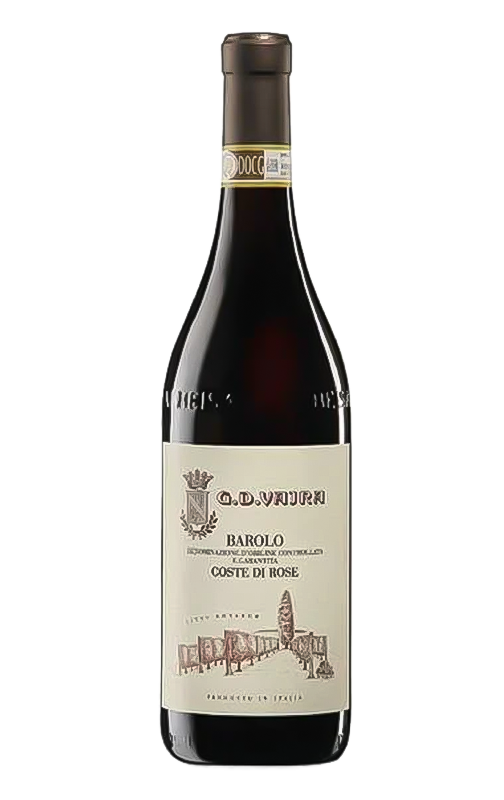
G.D. Vajra Barolo Coste di Rose 2020
Description
Le G.D. Vajra Barolo Coste di Rose provient d'une parcelle de 1,5 hectare située dans la petite région de Coste di Rose, avec des sols sableux bien drainés à 310 mètres d'altitude et des vignes cultivées de manière biologique. Après une sélection manuelle minutieuse, la vinification comprend une macération prolongée et malolactique en cuve inox, suivie de 36 mois en fûts très usagés. Le résultat est un barolo à production limitée, d'une grande finesse, d'une grande complexité et d'un caractère distinctif qui reflète la singularité de son Terroir.
Fiche technique

L'avis des experts
White pepper, dried roses, berries and mineral on the nose. Really elegant and chalky on the palate with medium to full body and a linear finish. Pure and driven. Drink or hold.
A Barolo of remarkable elegance and complexity. Lifted aromas of mixed wild berries, candied rose petals, cinnamon, and whole clove, are accompanied by warm, earthy notes. Tart cherries and cranberries dominate the palate, with woodsy undertones and chewy tannins that provide heft without overpowering. Savory and medicinal herbs linger on the finish, making this a captivating expression of this renowned cru. Drink Now - 2045
The 2020 vintage had good weather during flowering; Giuseppe believes this impacts the wines tremendously; whether it was lack of pollution during the lockdown, he considers that vine rows flowered gorgeously in the Barolo communes. The result is a vintage of fruitiness. He used more extended skin contacts to balance the fruitiness with a good structure for longevity's sake. Between bud break and picking was about 203 days; long and late picking is a blessing for Nebbiolo Vajra believes. Coste di Rose has the lowest elevation of the Vajra vineyards, and the newest, 2015, was the first vintage. It's relatively unknown even though it is pretty central between Canubi and Brunate. Red fruited and forward, perhaps with less structure, red and blue berries, mouthfuls of lavender and clove, and raspberry leaf offer a bright, herbaceous character that lifts the finish.





Nos membres n’ont pas encore laissé de commentaires pour ce millésime. Cliquez sur les millésimes précédents pour accéder aux commentaires.